
DIY Catering: Everything You Need to Know
DIY Catering.
This blog post has been in my drafts for almost 2 weeks now.
And the reason is honestly causes i'm not a professional caterer.
.
.
.
Yes, I’ve catered weddings in the past.
I have 3 aunts ...2 of them are retired now, but they used to do caterings for weddings and events and I’ve helped them cater some weddings here and there.
So to be able to write this blog post properly, I had to talk to them and ask them questions on how to navigate it realistically.
----
Now, before we actually start talking about anything, I want to preface this and say
...I am yet to see DIY Catering ever replace the role of a full-service caterer.
There is a reason caterers charge what they charge.
You’re paying for experience, professionalism, structure ...and execution.
So when you’re reading this, don’t go into it thinking,
“Oh, this is a replacement for hiring a caterer.”
That’s not what this is.
That being said ...do I believe you can still have a beautiful wedding, good food, happy guests without hiring a full-on caterer?
One million percent, Yes.
Alot of my friends have done DIY catering and it worked out really well for them.
So now that we’ve cleared that up, let’s get into it.
----
So when we talk about DIYing catering ...there are 7 Main questions you need to be able to answer.
1.) Who is making the food?
2.) How much food should you be making?
3.) Who is setting the food up?
4.) Who is making sure the food stays at the right temperature?
5.) Who is serving the food, and what is it being served on?
6.) Who is busing the tables?
7.) and finally ...Who is handling leftovers and packing up?
Once you’re able to answer all of these questions, and you know exactly who is handling each role, then you’ve basically figured it out.
1.) Who’s Making the Food?
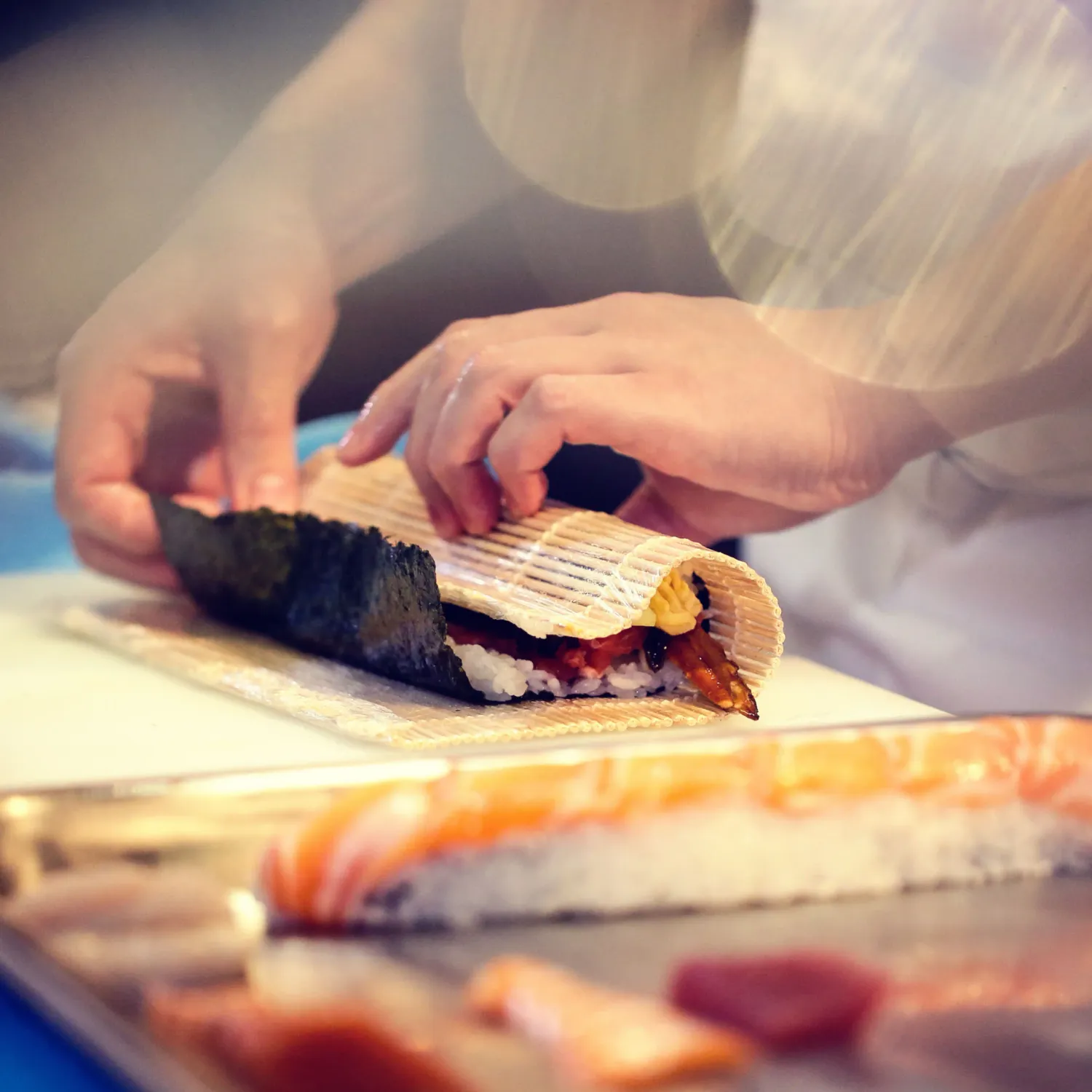
This is the first question you need to answer, cos everything else depends on it.
Now when people say they’re “DIY-ing” their catering, that can mean few different things.
-Some couples are cooking everything themselves.
-Others are getting food from family, a restaurant, or a mix of sources.
None of these options are wrong ...but they come with different levels of responsibility and risk.
.
.
.
.
If you’re cooking the food yourself or with family, the most important rule is this:
Nothing should be cooked the day before your wedding.
Your menu needs to be built around foods that can be prepared two to three days in advance, stored safely, and reheated without losing quality & taste.
So if a dish doesn’t hold up well, it shouldn't belong on menu.
Also if you’re not directly involved in cooking and you’re relying on family members, please pre-qualify them.
And I mean that in the nicest way possible.
Make sure these are people whose food you’ve actually eaten before.
You’ve been to their house.
You’ve seen how they cook.
You know if they clean as they go, wash their hands, and handle food properly.
Maybe it’s the clean-freak side in me or cos i'm African
...but you really don’t know how people operate in their own kitchens unless you’ve seen it.
So make sure they're people you genuinely trust ...not just anyone who volunteered.
.
.
.
Another option is having friends or family contribute food, similar to a potluck.
This can work well for smaller or more casual weddings, but it requires coordination.
Someone needs to oversee what’s being made so you don’t end up with too many sides and not enough main dishes.
You also need to consider consistency, portion sizes, and how those dishes will be transported and kept at the right temperature once they arrive.
.
.
.
Now a very popular middle-ground option is "Drop Catering".
This is when a restaurant prepares the food in bulk and either delivers it or has someone pick it up.
So they’re not serving it, but they’re handling the cooking.
And it's great cos it removes one of the biggest stressors of DIY catering ...while still keeping costs lower than full-service catering.
And it's also more reliable when it comes to portioning and food quality.
Or another option is reaching out to hospitality schools or culinary programs.
Many of these schools need outside events as part of their training, so they’ll let students cook for weddings at a much lower cost.
Sometimes you’re just paying for ingredients, sometimes a small fee, and there’s usually a supervisor involved.
It’s usually not something people think of ...but it can really help if you want support without paying full catering prices.
.
.
.
To end it ...it's not a must that you must DIY all the meals.
You can choose to DIY only certain parts of the meal, like apps or desserts ...while still bringing in outside food for the main meal.
This way you limit how much you’re taking on while still keeping a DIY element in your wedding.
---
Onto the next.
2.) How Much Food Should You Be Making?
So after you’ve decided who is making the food, the next thing you need to think about is ...How much food you’re making.
This part is a bit complicated because, obviously, if you’re using a restaurant or doing drop catering, they usually handle this for you.
You just tell them how many guests you have, they look at your menu, do their calculations, and that’s it.
You don’t really have to think too much about it.
But if you’re making the food yourself, or your friends and family are helping you cook, then this is something you have to figure out on your own.
.
.
.
.
The first thing you need to know is your guest count.
How many people are actually coming.
Let’s say you have already sent out invitations, you’ve gotten RSVPs, and you’re confident that about 100 people will be there.
Now, you don’t cook for exactly 100 plates.
You always want to add extra.
Usually about 5 to 10 extra plates for vendors, for unexpected guests ...or just as a buffer in case anything happens.
.
.
.
Next, look at how the food is being served.
For DIY catering weddings, it's almost always a buffet-style.
And for buffet-style meals:
Per adult guest
Protein: 150–200g cooked (about 5–7 oz)
Starch (rice, pasta, potatoes): 1–1.5 cups
Vegetables/sides: 1 cup
Salad: 1 cup
Bread: 1–2 pieces.
If you have two proteins, reduce each slightly.
Never give full portions of both ...to avoid waste.
---
Then multiply by number of guests ...so since we're talking about 100 guests
Chicken
180g per person × 100 = 18kg
Add 10% buffer (for vendor meals and others) → 20kg
Rice
1.25 cups per person × 100 = 125 cups
Convert to uncooked (which is about ⅓ when raw)
So your buying roughly 40–45 cups uncooked rice.
You always calculate raw weight, then convert.
But is your pasta is your main carb.
That means for 100 you want about one cup of cooked pasta per person, you’re aiming for about 100 cups cooked.
When you convert that back to dry pasta, you’re buying around 45 to 50 cups dry.
If you’re nervous, you push it slightly higher, because pasta is forgiving and leftovers aren’t a disaster.
If potatoes are the main carb, then you’re thinking in terms of a solid portion per person.
Roughly one medium potato per guest, once cooked and served, is enough.
So for 100 guests, you’re buying about 110 to 120 medium potatoes raw to give yourself a buffer.
After peeling and cooking, that turns into exactly what you need on the buffet.
(* But if potatoes or pasta are just sides, not the main carb ...you don’t give a full portion per person.
Since guests are already eating rice or another main, so you'll just half the portion*)
.
.
.
.
.
While for something like salad or vegetable sides, you’re not aiming for everyone to get a full bowl.
You’re aiming for everyone to have the option to take some.
Practically, that usually looks like one medium bowl comfortably serving about 20–25 people.
So for 100 guests, you’re looking at four to five medium bowls.
That’s enough to keep the table full without overdoing it.
Bread also works the same way ...people only grab it if they want it.
They don’t need it.
So you never do one bread per person for a buffet.
A realistic number is closer to 2/3 of your guest count.
So for 100 guests ...around 60 to 70 pieces is more than fine.
If they’re very small rolls, you can push it a bit higher, but you still don’t need 100.
Sauces, gravies, and stews are shared food.
People don’t take individual portions the way they do rice.
They spoon a little, move on, and that’s it.
A medium bowl can easily cover 30 to 40 people.
So for 100 guests, three or four bowls is enough.
Anything more usually comes back untouched.
3. Who Is Setting the Food Up?
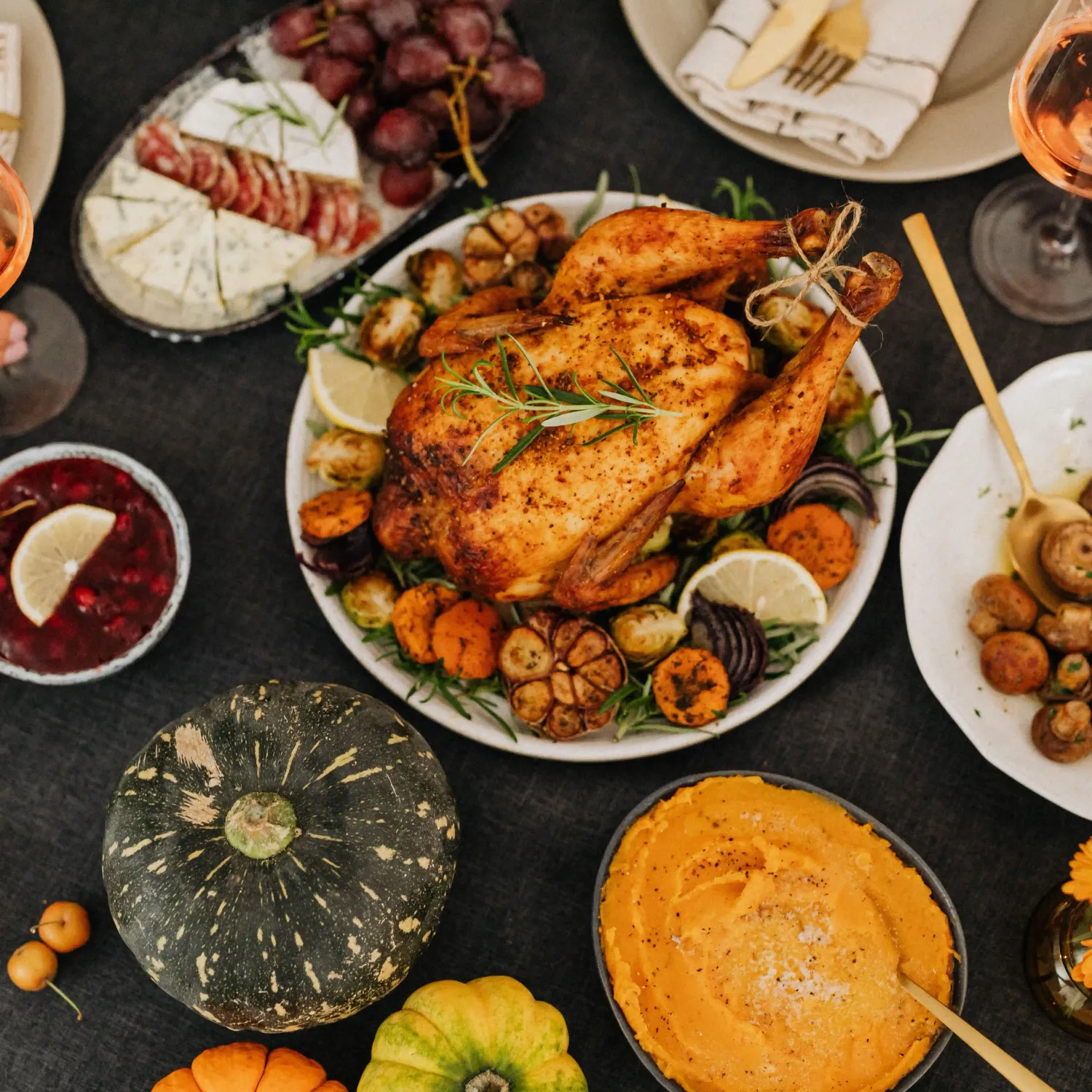
Once you know who’s making the food and what quantity ...the next question is who is actually setting it out on the day of the wedding.
This cannot be you.
(Unless your wedding is gonna be really relaxed and casual.)
But if it's not ...you should not be unwrapping trays, arranging platters, or figuring out where the buffet goes.
So whoever is responsible for setup needs to be decided ahead of time and fully briefed on what’s expected.
You can assign this role to a small group of trusted friends or family members or even hire servers.
Whatever route you’re taking ...the people need very clear direction.
They should know when to arrive, where the food will be stored when they get there, where the serving tables are located, and how everything should be laid out.
.
.
.
Also need to include knowing which items go out first, what needs to stay covered until the last minute ...and what should be refilled as the event goes on.
You’ll also want to confirm that your venue can support food setup.
-So is there a prep space or kitchen area?
-Is there access to power for warming trays or chafing dishes?
-Are there designated tables for food service, or do you need to bring additional tables and linens?
*You see how i'm hitting you these questions?
it's cos these details MATTERR ...and they're easily overlooked, especially when you're not working with a professional caterer*.
.
.
.
.
Now if you’re using drop catering, setup becomes even more important.
Someone needs to be present to receive the food, check that everything arrived, ...and immediately begin placing it into serving dishes or warming equipment.
---
The main thing you need to take away from this step is that ...there needs to be CLARITY.
Whoever is setting up should not be improvising.
They should be a plan to follow so that the food is ready, presentable, and in the right place without ...pulling you into decision-making on your wedding day.
4. Who Is Making Sure the Food Stays at the Right Temperature?
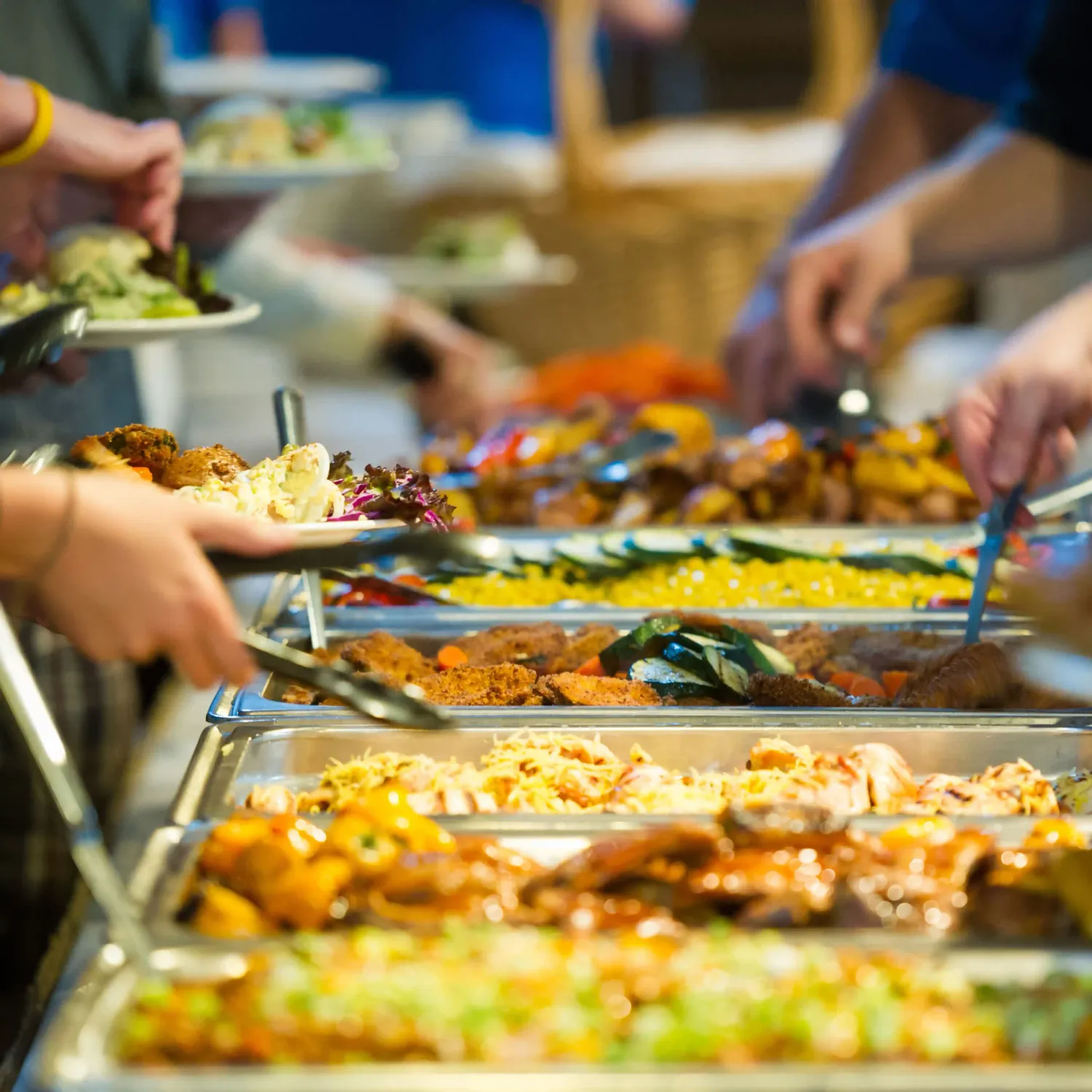
Temperature can make or break the entire meal.
So someone specific needs to be responsible also.
Hot food should stay hot.
That usually means using chafing dishes, warming trays, or ovens at the venue if they’re available.
They shouldn't be reheated too early or left sitting out for too long and it shouldn’t also be placed on the buffet until you’re close to serving time.
The goal is to move food directly from reheating to service with as little downtime as possible.
Cold food should stay cold.
Items like salads, desserts, or cold appetizers should remain refrigerated until shortly before they’re served.
If they need to be out for an long period, they should be placed over ice so nothing sits too long at room temperature.
.
.
.
.
And that's why i said before ...it's important to design your menu around what you can realistically maintain.
This DIY catering stuff only works well when you choose dishes that are forgiving.
5.) Who Is Serving the Food, and What Is It Being Served On?
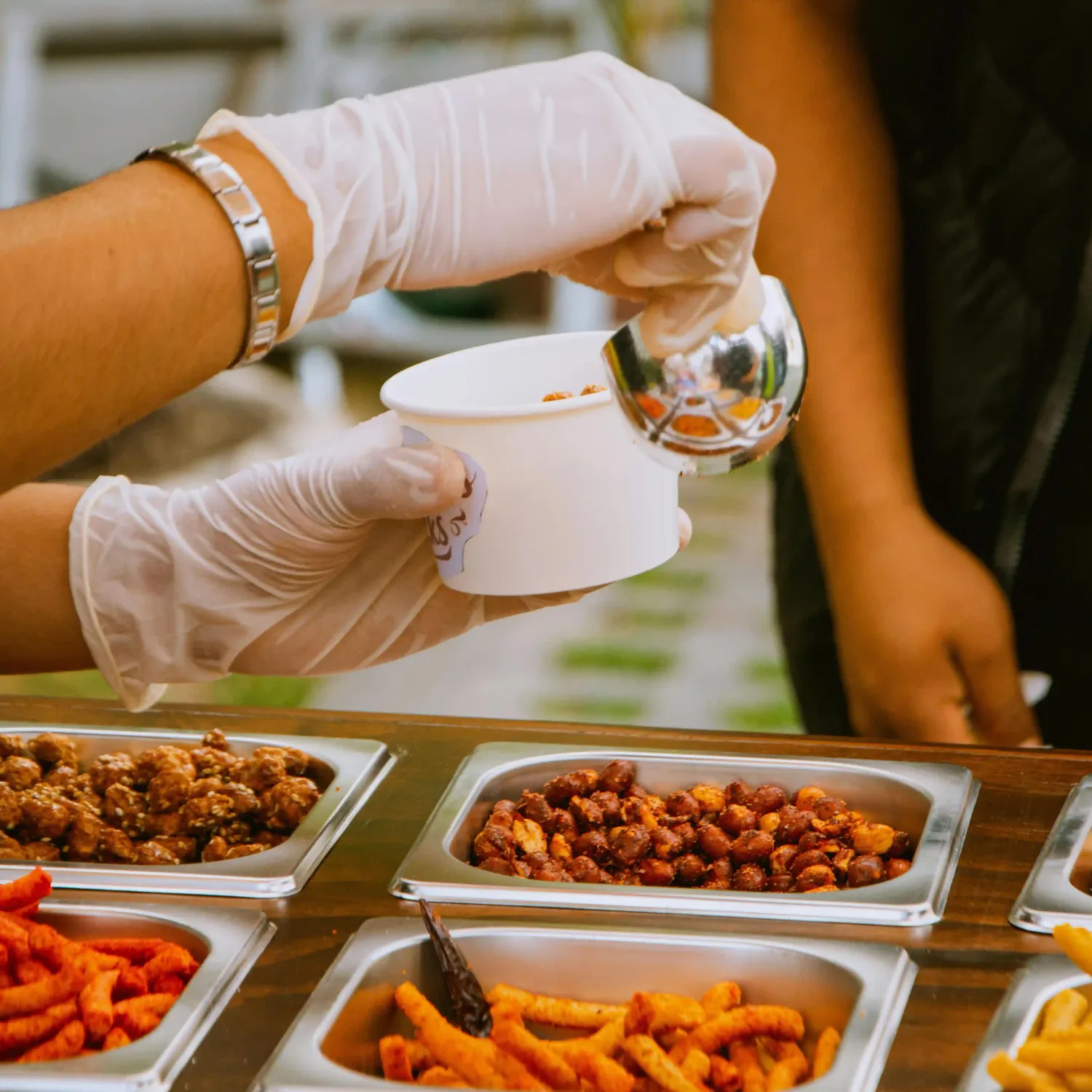
Now once you've have figured out; the quantity, process and temperature ...the next step is service.
The first thing obviously is to decide how you want the food to be served.
Alot of DIY weddings usually go for a self-serve buffet ...simply because it’s the most realistic option if you're hiring professional staff.
Now if that’s your plan, someone still needs to be there to oversee the buffet.
So that someone's uncle will not be out there putting 5 servings in their plate.
.
.
.
.
Next thing you need to think about ...is what the food is actually being served on.
Every time guests eat, they need a plate and a napkin.
So if you’re serving appetizers, a meal, and dessert, that’s 3 separate moments where guests need plates and napkins.
A simple to calculate quantities is:
number of guests × number of eating moments = minimum plates and napkins
then add a 15–20% buffer for vendors, drops, or replacements.
So for instance, if you have 100 guests and you’re serving appetizers, dinner, and dessert ...then you should plan for at least 300 plates and napkins, plus extra.
Cutlery also follows the same logic.
Dinner requires forks and knives, desserts usually require forks, and appetizers may require like small plates or cocktail napkins depending on how they’re served.
So it’s always better to have extra than to run short.
---
2 more questions to go...
6.) Who Is Bussing the Tables?
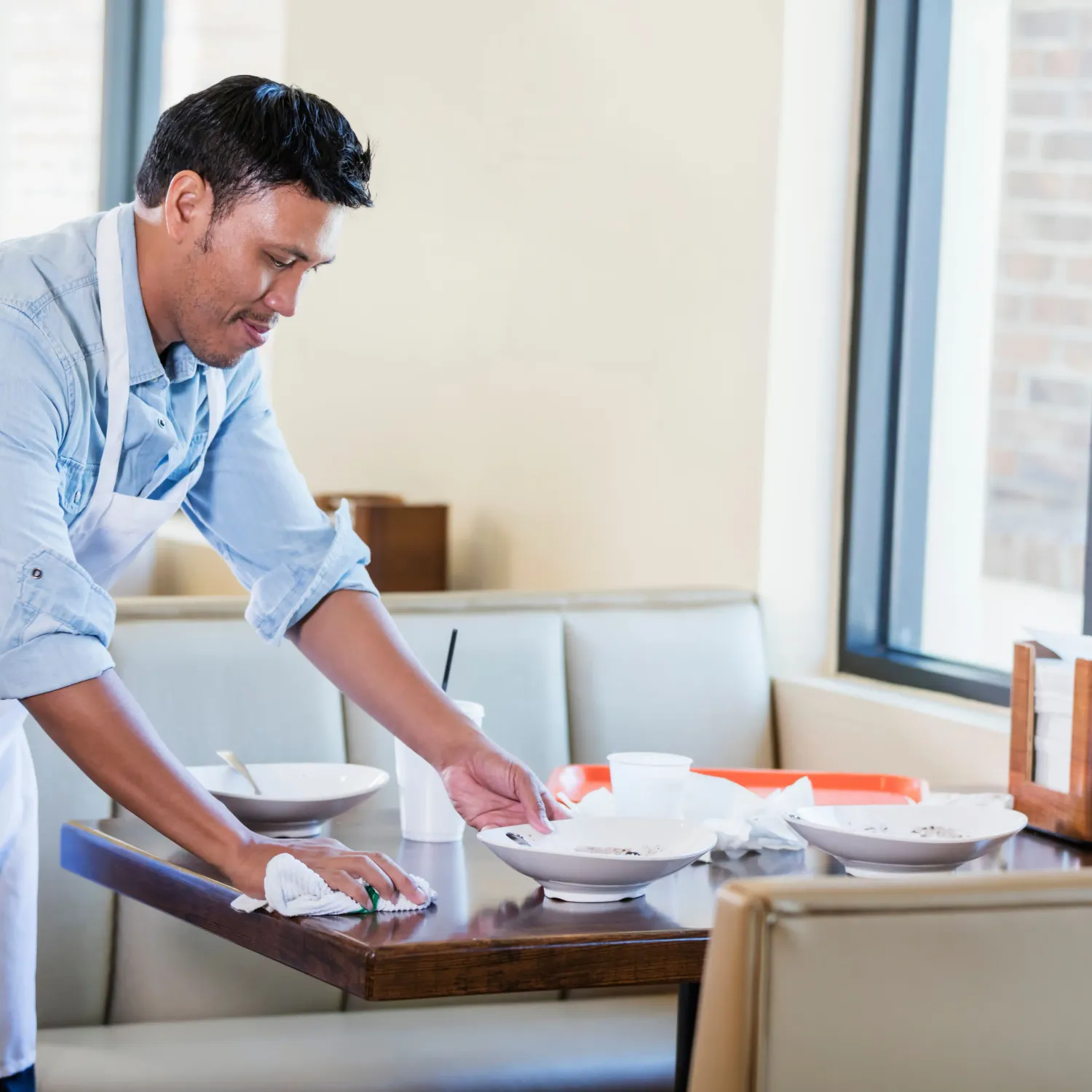
Now after the food has been served and guests are done eating, the next thing you need to think about is who is bussing the tables.
Meaning, who is clearing the tables.
.
.
.
Now, unless you're constantly reminding your guests ...they're most likely not going to clear their tables on their own.
And it’s not always because guests don’t have manners or anything, it’s just how people behave at events.
So if you want your guests to clear their tables ...then you need to have someone remind them constantly and explain to them where they're trashing it.
.
.
.
.
And even though guests clearing their tables themseves is a good option ... i still think that it can get a bit rowdy.
People are moving around at random times, tables look half-cleared, half-not ...it’s not cohesive.
A cleaner option is to assign people (not your guests) to clear the tables.
Now for this option you'll also have to think of when they are clearing.
So are they waiting until everyone is done eating and then clearing all the tables at once?
Because if you do that, especially with a lot of guests, you’re looking at a solid 20–30 minutes of nonstop clearing.
Or are they clearing as they go?
Personally, I think this works best.
So every 10–15 minutes, when a few guests are done eating, plates get cleared.
Tables stay tidy, things keep flowing, and the space feels more organized throughout the event.
---
However you decide to do it, the most important thing is this ...someone needs to be in charge of the tables.
Don’t assume guests will handle it on their own unless you plan to repeatedly remind them.
7.) Who is handling leftovers and packing up

Finally ...who is handling leftovers and packing up.
Now, if you had a caterer, they'd take care of this part.
They’ll pack everything up for you, handle leftovers, and if you want to take some home ...they’ll arrange it nicely so you can carry it out.
But since you’re DIYing, then this is something you have to sort out yourself.
Someone needs to be assigned to pack up everything; the plates, the chafing dishes, anything that remains.
.
.
.
.
This person either gives it to you to take home, packs it up for transport, or if your venue allows ...leave it overnight safely.
Also for leftovers...you can also get takeaway containers so guests can carry home leftovers.
This can work for food or even cake.
It’s cute, practical, and helps avoid waste.
.
.
.
But yeah that's all for DIY catering.
To Wrap it up...
So yeah, I think I covered everything.
Some the few tips I want to leave you with;
1.) This is not the time to experiment or try new recipes
Stick to what you know
What is already a crowd pleaser.
What is simple!
2.) Seek help from family and friends.
Throughout this whole post, I kept saying, “Have someone do this, have someone do that.”
All of them don’t have to be hired help.
You can ask family or friends, as long as you properly communicate with them what you want them to do.
3.) Be organized!
Have a book, a spreadsheet, something where you’re detailing everything.
That’s the only way you’ll be able to do this well.
.
.
.
.
If you guys have any questions or want some additional info, just email me.
I love hearing from you guys.
My email is plannarly@gmail.com.
---
Also before you go
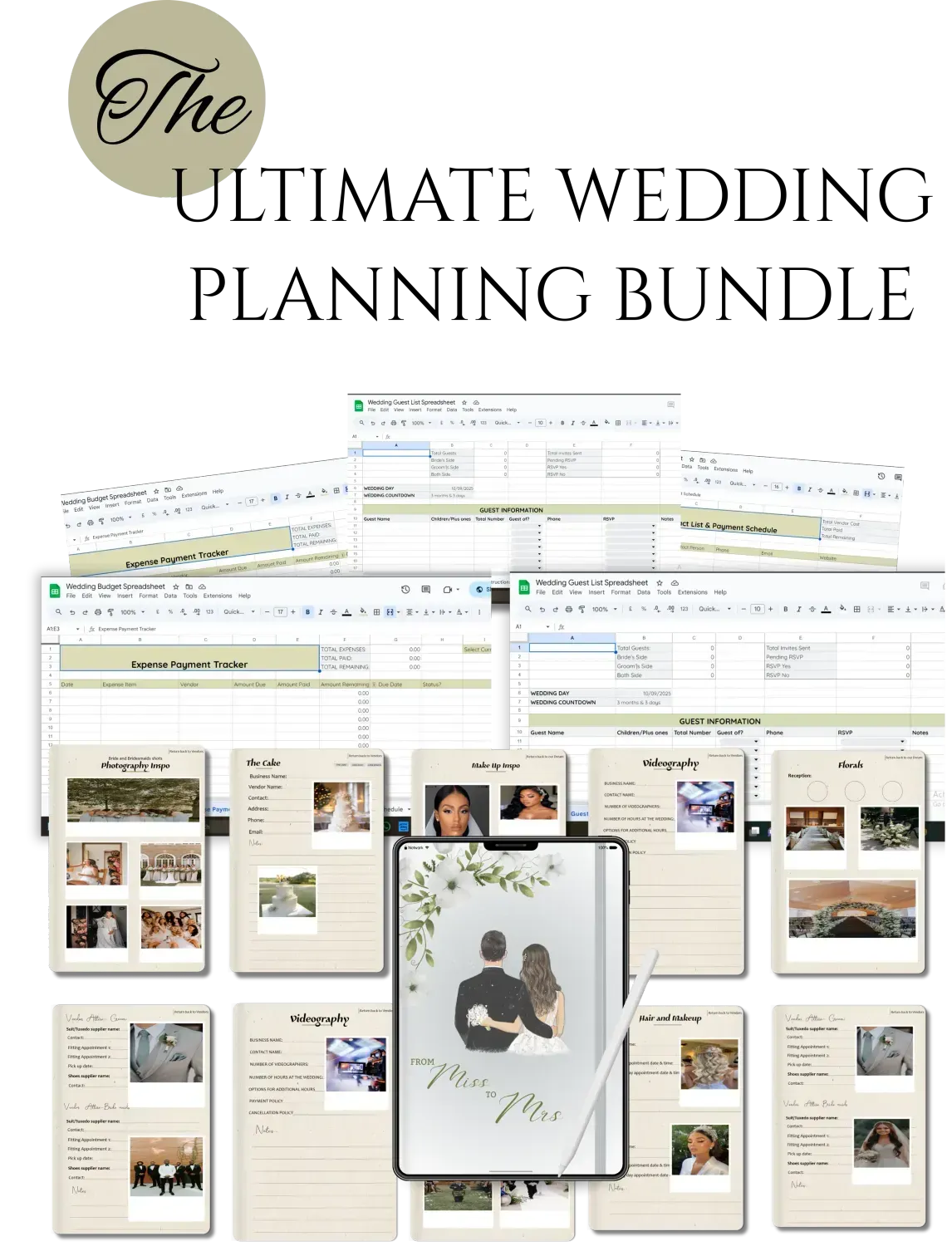
If you’re planning your wedding on your own ...like you’re not hiring a wedding planner and you need help?
I created a Wedding Planning Bundle specifically for brides doing it on their own
...to help them so it dosen't feel they're doing everything from scratch.
So if you want to check it out, the link is HERE.👈

You’ve GOT to read this next...

Wedding transportation is way more than just booking a car. Who rides with who, shuttles, timing, guests, and the stuff couples forget until it’s too late…this walks you through it all, simply.

Done trying to do everything yourself?
Here’s how to delegate your wedding day properly… what to assign, who to ask, and how to keep everything running smoothly without it all falling back on you.

You're not lazy. You're just overwhelmed.
These are the wedding planning reminders I wish i could sing in every bride's ear — the ones that keep you grounded when the stress starts messing with your head.